Bouncie is the tracker most often recommended to first-time buyers, and the reason is its simplicity: one OBD device, one straightforward subscription, and an app that does not drown families in fleet jargon. This review evaluates Bouncie against official documentation, its published pricing and platform features, and the patterns buyers report most often. We deliberately separate what Bouncie documents from what owners say anecdotally, because accuracy, battery behavior and app reliability vary by vehicle and use — and no tracker can guarantee behavior on every car.
What is Bouncie, and who is it for?
Bouncie is a 4G LTE OBD-II plug-in tracker aimed at families, small fleets and drivers who want live location and alerts without a complex telematics platform.
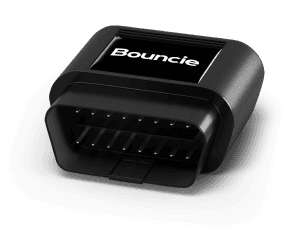
Bouncie’s official site describes an OBD2 device combining GPS, telematics and 4G LTE, with a required monthly subscription and no contracts. The platform centers on live location, route details, geo-zones, trip history, driving-event alerts, vehicle diagnostics and accident notification. That feature set maps to two audiences: households monitoring a teen or aging driver, and small operations that want vehicle visibility without an enterprise sales cycle.
Bouncie is not built for covert theft tracking — the device sits in the visible OBD port and a thief can unplug it — and it is not a fleet telematics suite. Buyers with those needs should start from the magnetic or hardwired pillar guides instead.
What do we know about setup, and how long does it take?
Setup is plug-in plus app registration: locate the OBD port, insert the device, and activate the subscription in Bouncie’s app or web account.
Because the device draws power from the OBD port and needs no wiring, physical installation is a few minutes on most cars. The account step — creating a Bouncie account, entering the device and choosing a plan — is where setup actually happens, and Bouncie’s own support materials walk through activation. Cars with recessed or angled OBD ports may need a little extra care fitting the device, and vehicles that power the port down with the ignition will not report while parked, which is a car behavior, not a device defect.
Our OBD-II explainer covers port behavior in more depth, including why the same plug-in can behave differently on different vehicles.
How much does Bouncie cost with its subscription?
Bouncie costs a one-time device purchase plus a required monthly subscription per device, with a lower per-device rate when you run three or more.
Bouncie’s official pricing page describes the device as a one-time charge, no activation fee and no contracts, with a subscription required for each active device and a discount applied at three or more devices. That makes year-one math simple: hardware plus twelve months of service. The discount matters most for multi-car households and small fleets, where Bouncie’s per-device cost becomes noticeably cheaper than per-device plans from premium telematics vendors.
Prices change and promotions appear, so the vendor page is the reference we verify at publication time. Compare the three-year total — not the monthly sticker — against Vyncs’ annual prepay and Tracki’s lower-cost plans in the cost comparison section below.
How does Bouncie install, and where does it not fit?
Bouncie installs by plugging into the car’s OBD-II port, which is easy and reversible but leaves the device visible, removable and dependent on port power behavior.
The OBD-II port has been standard on US cars and light trucks since 1996, so Bouncie fits most vehicles mechanically. The practical limits are placement and power: the device is visible under the dash, a passenger or valet could unplug it, and cars that switch port power off with the ignition stop reporting while parked. Owners who park on the street and want theft coverage should treat those limits seriously — a plug-in tracker is a recovery aid after the fact, not a theft deterrent while the thief is still at the car.
For hidden, unpluggable tracking, the alternative is a magnetic or hardwired unit; the trade-offs are compared in the hub guide.
What does the Bouncie app offer day to day?
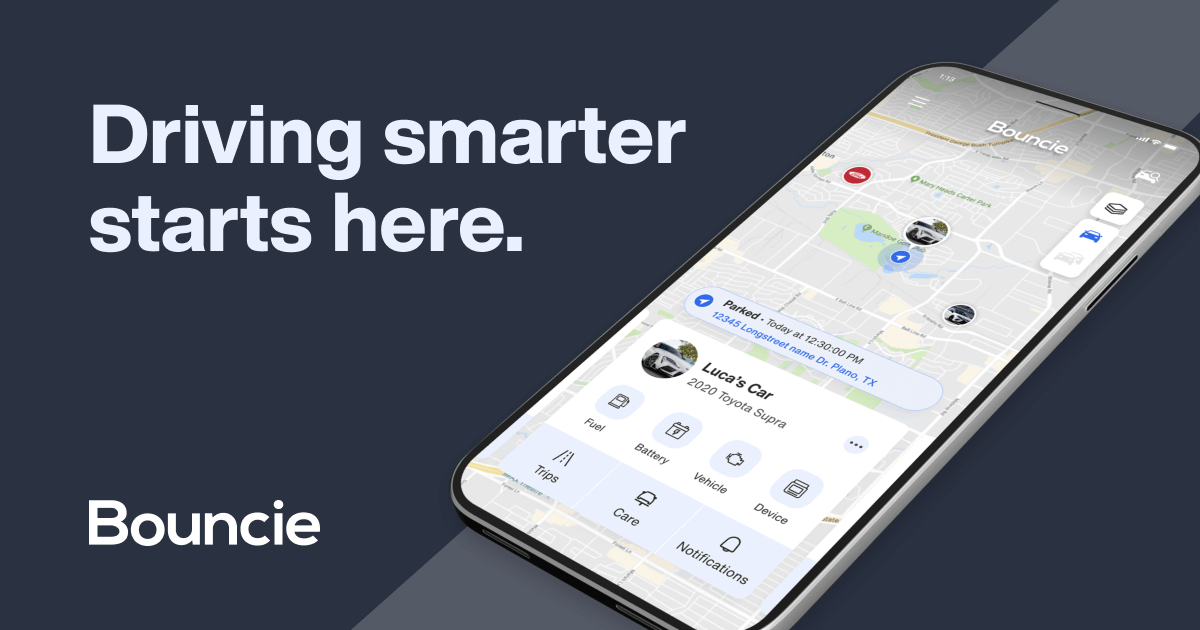
The app is the product: live location, trip history, geo-zones, driving alerts, diagnostics and accident notification are the features owners actually use.
Bouncie’s platform description lists instant updates for location, route details, geo-zones and trip history on the tracking side, plus speed monitoring, driving events and custom alerts for the safety side, with accident detection, vehicle diagnostics and weather alerts included rather than sold as add-ons. Shared access lets families and small teams see the same vehicles without sharing one login. For a parent, the practical loop is simple: set a geofence around school or home, get an alert when the car crosses it, and open the app to review the route and speed bands.
The app’s design philosophy is restraint — fewer toggles than enterprise telematics, clearer alerts for consumer use. That is exactly right for most family buyers and slightly limiting for fleets that need driver ID, maintenance scheduling or dispatch integration.
What do we know about accuracy and update speed?
Bouncie documents instant updates for location and alerts, while absolute GPS accuracy depends on reception, antenna placement and the car’s environment.
No consumer tracker guarantees street-level precision everywhere, and Bouncie is no exception: open-air fixes are accurate enough for route review and recovery, while garages, metal structures and dense urban canyons weaken the signal. Bouncie’s official materials emphasize instant updates and quick alert delivery, which addresses the interval concern that matters most for family oversight. For theft response, remember the OBD form factor’s core limit — the device stops reporting the moment it is unplugged, so update speed helps only while the device is still in the car.
If you need documented per-tier update intervals for comparison, Vyncs publishes its sampling and upload rates; Bouncie’s simpler single-plan model trades that transparency for fewer choices. Read more in our 4G LTE explainer.
Does Bouncie drain the car battery?
Any device plugged into an always-powered OBD port draws a small current, which is usually harmless for daily drivers but can matter during long idle periods.
Bouncie draws power from the OBD port whenever the port is live, so the drain question is really a car question: vehicles with always-on ports add Bouncie’s draw to the car’s normal parasitic load, while vehicles that switch the port off with the ignition remove it. Daily drivers recharge through the alternator and rarely notice any difference. Owners who leave a car parked for two or three weeks, or who already have a weak battery, should monitor voltage and consider a magnetic battery tracker instead.
This is the same power reality we describe in the OBD explainer for every plug-in tracker, and it is why we recommend testing a new device on your own car rather than trusting a reviewer’s single-vehicle result.
What do owners complain about most?
The most repeated owner themes are the required subscription, occasional app or alert hiccups, and the visible OBD plug, all consistent with Bouncie’s simple design.
Owner feedback patterns across reviews and forums tend to center on cost rather than hardware failure: the subscription is required for life, so the total over several years exceeds the device price, and some owners resent paying during months the car sits unused. App and alert issues appear in every tracker’s review history and are best read as anecdotal signals, not universal defects — a single alert failure tells you little, while repeated reports of the same behavior tell you what to test before you rely on the device. The visible OBD plug is a design trade-off, not a bug, and buyers who expected a hidden tracker are usually the ones disappointed.
We treat owner reports as questions to verify rather than measurements, consistent with the methodology on our How We Test page.
How does Bouncie compare with Vyncs, Tracki and Spytec?
Bouncie wins on simplicity and multi-device pricing, Vyncs wins on annual no-monthly-fee billing, and Tracki and Spytec offer cheaper entry with different trade-offs.
| Model | Form factor | Plan shape | Best fit |
|---|---|---|---|
| Bouncie | OBD plug-in, 4G LTE | Device + required monthly; discount at 3+ | Simplest all-round consumer tracker |
| Vyncs | OBD plug-in, 4G LTE | Annual plans, no monthly fee; tiers differ by update rate | Budget buyers who pay yearly |
| Tracki | Magnetic mini, battery | Low device price; plans from about $9.95/mo | Multi-asset and travel tracking |
| Spytec | Magnetic mini, battery | Required subscription | Price-conscious asset owners |
Bouncie’s strongest argument is the complete package: current Vyncs pricing, Tracki’s plan structure, LandAirSea 54’s magnetic alternative and Spytec’s lineup all get reviewed on this site, and the honest comparison changes by use case. Family buyers who want one car tracked simply usually land on Bouncie; budget buyers doing annual math often prefer Vyncs; owners tracking multiple non-car assets usually need Tracki’s flexibility.
Who should buy Bouncie, and who should skip it?
Buy Bouncie for simple family or small-fleet tracking of daily drivers; skip it if you need hidden theft tracking, no recurring fee or multi-asset coverage.
Bouncie fits the buyer who wants the least complicated reliable tracker: plug it in, open the app, set a couple of zones and forget it. It is a poor fit for three groups: owners who want a hidden tracker for theft (choose magnetic or hardwired), owners who refuse a monthly subscription (compare Vyncs’ annual plan or the no-fee finder category), and owners tracking boats, trailers and equipment (a battery mini such as Tracki serves better).
The bottom line for 2026: Bouncie remains the easiest recommendation for most drivers because its strengths and limits are both clear. Buy it for what it is — a simple, reliable, subscription-based OBD tracker for daily-driven cars — and you are unlikely to be surprised.
FAQ: Bouncie review
Is Bouncie worth the monthly fee?
For families and small fleets that will actually use live location, geo-zones and driving alerts, yes — Bouncie’s all-inclusive feature set at a simple monthly rate is easy to justify. For a car that sits unused for months, the subscription feels wasted, and an annual or no-fee option may fit better.
Does Bouncie drain the car battery?
It draws a small current whenever the OBD port is powered. Daily drivers rarely notice it, but cars parked for weeks or vehicles with weak batteries can be affected. Check whether your port stays live with the ignition off before relying on Bouncie.
Can Bouncie be used on any car?
Bouncie fits cars and light trucks with an OBD-II port, standard in the US since 1996. Behavior varies by vehicle, especially whether the port stays powered when parked, so treat “works on any car” claims with skepticism and test on your own car.
How accurate is Bouncie GPS?
Accuracy is typical of consumer GPS: strong in open air, weaker in garages and urban canyons. Bouncie markets instant updates for location and alerts; the practical test is where your car parks and how quickly the app shows a move.
Compare Bouncie side by side with its closest rivals before buying: read the hub guide for category context, then see how Vyncs, LandAirSea 54 and Tracki review on this site — each review uses the same criteria so the comparison stays fair.