A tracker for a teen driver is not the same product as a tracker for a stolen car. Parents are buying visibility and a coaching loop — where the car is, when it moved, whether the driver sped — and the best tracker is the one whose app turns that data into a conversation instead of a log. This list compares the family-focused OBD trackers worth considering in 2026, with honest pricing and the coaching features that separate them.
Why does this list focus on OBD trackers for teens?
Because teen oversight needs always-plugged simplicity and rich trip data, which OBD trackers deliver better than hidden battery devices or finder tags.
An OBD tracker stays in the car, draws power from the port and reports location and driving events every trip, which matches how parents actually monitor a new driver. Magnetic trackers add battery discipline a family should not have to manage, and finder tags do not report reliably enough for trip-level coaching. The picks below all plug into the OBD-II port and are documented on official pages we verified.
How do we pick the best trackers for teen drivers?
We score each tracker on coaching features, alert reliability, subscription cost and how simply a parent can set it up and share access with the family.
The evaluation follows our How We Test criteria: does the app show arrival, speeding and route history without false alerts, and can the parent actually understand the report? Rankings are editorial and independent, with official pricing pages linked so the monthly cost is checked before purchase. Owner feedback is treated as anecdotal.
What are the best trackers for teen drivers at a glance?
| Pick | Model | Standout coaching feature | Plan shape |
|---|---|---|---|
| Best overall for coaching | MOTOsafety | Driver report card | No-contract monthly service |
| Best all-round value | Bouncie | Geo-zones, speed bands and trip history | Monthly, discount at 3+ |
| Best annual-billing option | Vyncs | Mileage, trips and driving alerts | Annual, no monthly fee |
The table sorts by coaching depth first, because a tracker without a usable report is just an expensive location dot. The model reviews linked from the hub guide give each pick’s full breakdown.
Which tracker is best for coaching a teen driver?
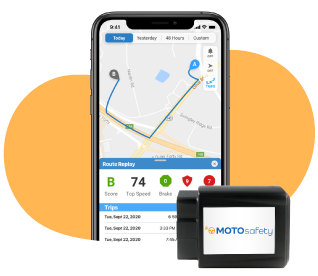
MOTOsafety is the best tracker for active coaching because its driver report card turns location and speeding data into a parent-teen conversation.
MOTOsafety’s official page describes an OBD device with location, arrival alerts and speeding history plus a web dashboard built for parents, and its feature set is the most coaching-specific of the three. The cost is the trade-off: its no-contract monthly service typically runs higher than Bouncie’s plan, so the report card must actually be used to justify the price. See the full verdict in the MOTOsafety review.
Which tracker is the best all-round value for families?
Bouncie is the best all-round value because it delivers live location, geo-zones, speed alerts and trip history in one simple app at a lower monthly rate.
Bouncie’s platform covers everything a parent needs day to day, and its pricing page shows per-device monthly rates with a discount at three or more — useful when both parents and the teen drive tracked cars. It lacks MOTOsafety’s formal report card, but many parents find its speed bands and route details sufficient. The Bouncie pricing page is the source for current rates.
Which tracker is the best annual-billing option for parents?
Vyncs is the best annual-billing pick because its plans remove the monthly fee and its tiers are documented well enough to choose the right update speed.
Vyncs bundles device, SIM and first-year service into an annual payment, and its Basic, Premium, Pro and Fleet tiers let parents trade speed for price transparently. For a family that will keep the tracker for a year, the annual total is usually lower than a monthly plan on the same feature level. Current tiers and pricing are on Vyncs’ official site.
Which tracker should parents avoid for teen oversight?
Parents should avoid hidden magnetic trackers for the everyday car and finder tags for trip data, because both fail the coaching and reliability test.
A magnetic tracker hidden on the teen’s car creates distrust and adds a battery routine with no coaching value, and an AirTag-style finder does not report trips reliably enough to review driving. Save magnetic trackers for theft-recovery use and finder tags such as Tile for keys; the teen car needs an OBD tracker with trip-level reporting. The GPS vs AirTag vs Tile comparison explains why finders cannot do this job.
What does teen-driver tracking really cost in year one?
Year-one costs range from roughly $160 to $300 for device plus service, with Bouncie usually cheapest for one car and MOTOsafety highest for its coaching set.
Bouncie adds a monthly subscription to a device purchase, Vyncs charges one annual bundle, and MOTOsafety separates device price from a no-contract monthly service. Parents comparing should add twelve months of service to the device price and choose the plan tier that delivers the alerts they will actually use. Full subscription math for each pick is in the model reviews on this site.
Which setup tips matter for a teen-driver tracker?
Plug the device in, set the home and school geofences, share access with the parent who coaches, and confirm alerts arrive on that phone.
Setup is minutes with an OBD device, but the family routine is the product: agree with the teen on which alerts exist, use the report to coach rather than surveil, and test arrival and speed alerts for a week before relying on them. Also confirm the car’s OBD port behavior for parked reporting, as covered in the OBD explainer.
How do you get the current best price?
Buy from the official store, compare the plan that fits your coaching style, and check multi-device discounts if more than one car is tracked.
Official stores show current hardware and plan pricing without marketplace confusion. Families tracking two cars benefit from Bouncie’s multi-device discount; parents committed to a full year should run Vyncs’ annual math; and parents who will use a report card should price MOTOsafety against the value of the coaching loop. Keep the receipt and cancel terms so you can switch if the app does not fit your family.
FAQ: choosing a tracker for a teen driver
What is the best GPS tracker for teen drivers?
MOTOsafety is the best pick when the driver report card will be used for coaching; Bouncie is the best all-round value; Vyncs is the best annual-billing option. All three are OBD trackers verified against official documentation.
Should I hide a tracker on my teen’s car?
No — hidden tracking undermines the coaching relationship and adds battery maintenance with no reporting benefit. Use a visible OBD tracker and agree with your teen about the alerts, or check the rules in your state about disclosure.
Can a GPS tracker stop a teen from speeding?
No tracker physically prevents speeding, but speed alerts and trip reports let parents respond consistently, which is how the coaching loop changes behavior. Discuss consequences before installing so the alerts are not a surprise.
Does a teen tracker need a monthly subscription?
Yes, OBD trackers that report driving data need a cellular plan. Bouncie and MOTOsafety bill monthly, while Vyncs bills annually; compare the year-one total before choosing.
Read the full MOTOsafety, Bouncie and Vyncs reviews on this site before choosing, and use the OBD explainer to check port behavior and battery questions on your family car.