RVs and travel trailers are stolen from driveways, storage yards and campgrounds, often on trailers that can be hitched and gone in minutes. The tracking setup has to survive months of storage and still report the moment the rig moves. This guide covers choosing a weatherproof battery tracker, placing it on an RV or trailer, configuring storage-mode alerts and budgeting for the plan.
What does an RV or trailer setup need?
It needs a weatherproof hidden tracker with long standby, movement alerts and cellular reporting that works while parked and on the road.
Magnetic battery trackers such as the LandAirSea 54 are built for this job: waterproof, magnetic and battery-powered so they keep working when the rig’s power is off. Finder tags fail because they depend on nearby phones, and OBD plugs do not exist on a trailer.
Which tracker type fits RVs and trailers?
Battery magnetic trackers fit trailers and stored RVs; hardwired units suit motorhomes that are driven regularly and have available power.
A trailer has no OBD port, so the choice is magnetic versus hardwired. The hardwired option suits a motorhome with house power, while a magnetic unit works on trailers and stored rigs without wiring. Placement and weather protection are covered in the magnetic explainer.
How do you place it on an RV or trailer?
Mount on clean steel in a hidden, dry spot that still sees sky, such as inside the frame or under a protected rail.
Trailers offer frame rails and crossmembers away from moving parts; RVs offer chassis steel and storage compartments with some signal. Keep the tracker out of road spray and away from exhaust heat, and test the report from the storage location. A magnetic unit in a fully enclosed metal box will not report.

Which settings should you configure first?
Enable movement alerts, set a storage geofence and choose a battery-save mode that still reports movement during long storage.
Movement alerts fire when the rig is hitched or moved; the geofence flags departures from the storage yard. Battery-save modes stretch standby for months, but test that the tracker still wakes and reports before relying on it after a long season. Recharge on the schedule the mode requires.
What should you budget?
Budget roughly $120 to $300 in year one for a waterproof tracker and plan, with higher costs for hardwired installs.
LandAirSea’s plan starts around $19.95 per month, and Tracki offers lower-cost alternatives for less rugged use. Hardwired motorhome installs add labor. For a stored trailer, the tracker can run on battery-save all season with one or two recharges, so the main cost is the annual plan.
What happens if the rig is stolen from storage?
Open the live map, note the direction of travel, file a report and share the live location with police.
Most rig thefts happen at storage or campgrounds, so the first movement alert is the critical one. Keep the account ready to share, and check the tracker’s last position even if alerts stop — a hidden device often outlasts the thief’s search. Recovery guidance is in the theft-recovery guide.
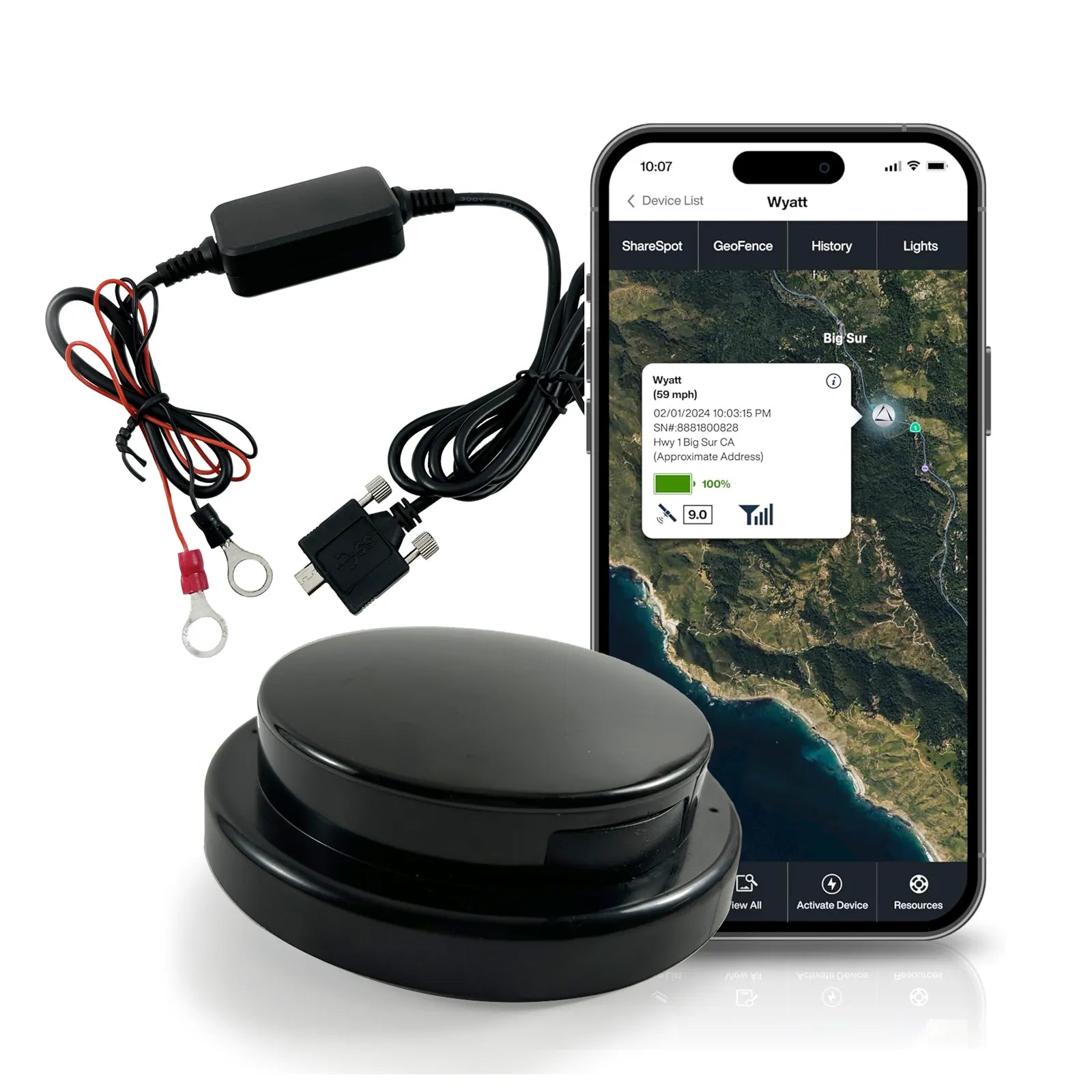
What is the recommended RV setup?
Use a waterproof magnetic tracker with movement alerts and battery-save mode on trailers and stored RVs, and hardwired on daily-driven motorhomes.
The LandAirSea 54 is the rugged trailer pick; hardwired options suit motorhomes with power. Place it legally on property you own, test the storage report and recharge on schedule so the rig is still visible when the season starts.
FAQ about GPS trackers for RVs and trailers
What is the best tracker for an RV or trailer?
A waterproof magnetic tracker such as the LandAirSea 54 for trailers and stored RVs, with hardwired units for motorhomes driven regularly.
How long will a tracker last in storage?
In battery-save mode, trackers can last weeks to months depending on the model and signal; test your mode and recharge on schedule before long storage.
Can a tracker work on a trailer with no battery?
Yes. Battery magnetic trackers run on their own power, which is why they suit trailers with no electrical system.
Do RV trackers need subscriptions?
Yes. Cellular trackers need a plan, typically $10 to $25 per month depending on the vendor and tier.
Compare rugged magnetic options in the theft-recovery list, and read the LandAirSea 54 review before mounting anything.