Bouncie and the LandAirSea 54 are the two most recommended trackers for completely different reasons: Bouncie is the simplest plug-in tracker for a daily-driven family car, while the LandAirSea 54 is a hidden, waterproof magnetic unit built for theft recovery on vehicles that sit. Comparing them directly is really comparing two philosophies — plug-in convenience versus covert battery tracking — and the right choice depends on what happens to your car when it is parked.
Why do Bouncie and the LandAirSea 54 get compared so often?
Because both are top picks in the same “best car tracker” conversations, even though they solve different problems: daily oversight versus hidden theft recovery.
Buyers researching trackers encounter Bouncie as the easy recommendation and the LandAirSea 54 as the theft-recovery favorite, then ask which one to buy without realizing the question is really about form factor. Once the use case is defined — monitor the car your teen drives, or recover the car someone steals — the comparison narrows to install, battery and subscription math.
How do the hardware and installation compare?
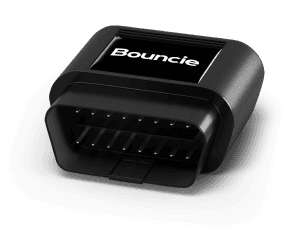
Bouncie plugs into the OBD port in minutes and stays visible; the LandAirSea 54 mounts magnetically with no wiring and hides on clean steel.
Bouncie needs the car’s OBD port and reports while the port behaves; the LandAirSea 54 carries its own battery, so it works even when the car battery is disconnected — the scenario theft recovery depends on. The flip side is maintenance: Bouncie has none beyond the subscription, while the 54 must be recharged on a schedule that matches its update settings. That trade-off is the heart of the magnetic versus OBD decision.
How do the apps compare day to day?
Bouncie’s app is built for families with geo-zones, trips and driving alerts, while the LandAirSea app focuses on location, movement alerts and asset oversight.
Bouncie gives parents and small fleets a daily-driver dashboard with route details and event alerts. The LandAirSea 54’s platform emphasizes knowing when an asset moves and where it is, which suits theft response and trailer checks rather than teen-driver coaching. Both work on iOS and Android; the difference is what each dashboard assumes you are doing.
How do subscription costs compare?
Bouncie costs a device plus a monthly plan with a discount at three or more, while the LandAirSea 54 requires a subscription from about $19.95 per month on top of the device.
Bouncie’s pricing page shows its monthly model and multi-device discount; LandAirSea’s product page lists subscriptions from about $19.95 per month. In year-one terms the 54 usually costs more, and its battery routine adds time if not money. Budget buyers tracking a daily driver usually find Bouncie cheaper; buyers protecting a stored asset pay for the 54’s independence.
How do accuracy and update speed compare?
Bouncie emphasizes instant updates for location and alerts, while the LandAirSea 54 reports on a schedule that trades speed against battery life.
Bouncie’s OBD power lets it report frequently without battery worry, which suits live family oversight. The LandAirSea 54 must balance update freshness against its battery, so owners choose a mode: faster reporting for theft-prone cars, slower modes for stored assets. GPS accuracy follows reception on both, and neither guarantees street-level fixes in garages or under metal — the practical differences are in the update settings and the power source.
How do battery and power draw compare?
Bouncie draws small current from the OBD port while the LandAirSea 54 runs entirely on its internal battery, which must be recharged on a schedule.
Bouncie’s risk is the long-idle car with an always-powered port and a weak battery; the LandAirSea 54’s risk is a dead internal battery discovered after an event. Daily drivers handle Bouncie’s draw easily, while stored vehicles favor the 54’s independence if the owner keeps the recharge routine. Neither is wrong — they just shift the battery burden to different people at different times.

How do alerts, zones and reports compare?
Bouncie covers driving events, geo-zones and trip reports for daily use; the LandAirSea 54 covers movement alerts and location history for asset protection.
Bouncie’s feature set reads like a family or fleet tool: speed events, geo-zones, route history and accident alerts. The LandAirSea 54 reads like a security tool: movement detection, geofences and history for recovery and insurance. Buyers who want driving reports should choose Bouncie; buyers who want a silent asset alarm should choose the 54. The hub guide maps both to use cases.
What do owners of each say?
Bouncie owners focus on the monthly fee and app simplicity, while LandAirSea 54 owners focus on battery discipline and the subscription cost.
Both products show occasional app and alert reports, which we treat as anecdotal. Bouncie’s recurring theme is the never-ending subscription; the 54’s recurring theme is recharging on schedule and paying a higher plan rate. Read current app-store and forum feedback and test either device in your own parking situation, because both behaviors depend heavily on how the car is used.
Who does each tracker fit best?
Bouncie fits daily-driven cars needing family or fleet oversight; the LandAirSea 54 fits cars, trailers and assets that sit and need hidden theft coverage.
Choose Bouncie when the car is driven regularly and you want location, trips and driving alerts with zero maintenance. Choose the LandAirSea 54 when the asset is parked for long stretches, you want it hidden, or you want tracking that survives a disconnected car battery. If you want both, many owners run an OBD tracker for daily use and a magnetic unit for recovery — the two complement rather than replace each other.
What is the verdict: Bouncie or LandAirSea 54?
Pick Bouncie for simple daily oversight of a driven car; pick the LandAirSea 54 for hidden, battery-powered theft recovery of a parked asset.
There is no single winner because the products answer different questions. A parent monitoring a teen should choose Bouncie; an owner protecting a stored car, trailer or boat should choose the LandAirSea 54 and accept the recharge routine. Budget buyers who need both behaviors should compare Tracki as a cheaper magnetic alternative and the Spytec lineup in the hub guide.
FAQ about Bouncie and LandAirSea 54
Which is better: Bouncie or LandAirSea 54?
Bouncie is better for daily family or fleet oversight; the LandAirSea 54 is better for hidden theft recovery on vehicles that sit. Define whether the car is driven or parked, and the choice becomes clear.
Can the LandAirSea 54 track a daily driver?
Yes, but it requires recharging on a schedule and its plan typically costs more than Bouncie’s. For a daily driver, Bouncie’s plug-in simplicity is usually the better fit.
Can Bouncie recover a stolen car?
Only while the device stays plugged in. A thief can remove an OBD plug in seconds, so for theft recovery a hidden magnetic or hardwired tracker is the safer choice.
Can I use both trackers on one car?
Yes. Many owners run Bouncie for daily visibility and add a magnetic unit such as the LandAirSea 54 as a hidden recovery layer, accepting two subscriptions for two different jobs.
Read the full Bouncie review and LandAirSea 54 review, then compare both against Tracki in the hub guide.