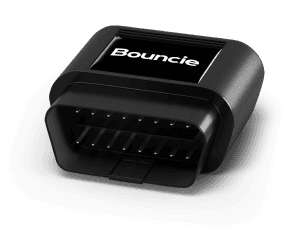
Bouncie and MOTOsafety both target the family car, but they are built for different parents: Bouncie delivers simple location and alerts at a lower price, while MOTOsafety adds a driver report card designed for coaching a teen or checking on an older driver. This comparison lines up the two OBD trackers on app features, subscription cost, update behavior and battery questions, so you can decide whether the coaching layer is worth the higher monthly bill.
Why do Bouncie and MOTOsafety get compared so often?
Because both are OBD plug-ins aimed at family oversight, which makes the coaching feature set and the monthly price the real decision.
Parents researching trackers for a teen driver see the same two names repeatedly: Bouncie for its simplicity and value, MOTOsafety for its driver-focused design. Both install in the same port and report the same basic data, so the comparison turns on whether the parent will actually use a report card and coaching loop, and whether that justifies the price difference.
How do the hardware and installation compare?
Both plug into the OBD-II port in minutes; the hardware is equivalent, and the differences are in the app and the plan rather than the device.
Neither product requires wiring, and both draw power from the OBD port, so installation is the same five-minute job on any car with the standard port. MOTOsafety’s positioning adds a coaching dashboard aimed at parents, while Bouncie keeps its platform general enough for families and small fleets. Buyers who need concealment or battery-free installs should compare magnetic or hardwired options in the hub guide.
How do the apps compare for parents?
MOTOsafety’s app is built around the driver report card and coaching loop, while Bouncie’s app is simpler and serves family oversight without the formal report.
MOTOsafety turns trips into a report with location, speeding history and a coaching summary, which is the feature Bouncie lacks; Bouncie covers live location, geo-zones, speed bands and trip history in a cleaner, less school-like interface. Parents who want a formal coaching conversation tend to prefer MOTOsafety; parents who just want arrival and speed alerts may find Bouncie sufficient at a lower cost.
How do subscription costs compare?
Bouncie charges a device purchase plus a simple monthly plan with a discount at three or more, while MOTOsafety separates device price from a higher no-contract monthly service.
Bouncie’s pricing page shows the monthly model and multi-device discount; MOTOsafety’s official page lists a device price and a separate monthly service. In year-one terms, MOTOsafety typically costs more for the coaching features. Parents should ask whether the report card will be used often enough to justify the gap, because both trackers deliver the underlying location data.
How do accuracy and update speed compare?
Bouncie emphasizes instant updates on its platform, while MOTOsafety provides location and trip reporting sufficient for family oversight rather than theft pursuit.
Neither vendor publishes the detailed per-tier intervals Vyncs does, so the honest comparison is that both report well enough to know where the car is and review trips, and neither is marketed as a theft-recovery tool. GPS accuracy follows reception on both, with garages and metal structures weakening fixes. Buyers who need documented speed tiers should compare the Vyncs options in the 4G LTE explainer.
How do battery and power draw compare?
Both draw small current from an always-powered OBD port, so long-idle cars are the only real battery concern for either device.
Daily drivers recharge the draw through the alternator and rarely notice either tracker; cars parked for two or more weeks with weak batteries are the risk case. Because both are OBD plug-ins, the port behavior of the car decides whether the device reports while parked and whether the battery is affected. The OBD explainer covers how to test this on your own vehicle.
How do alerts, zones and driving reports compare?
Both offer arrival alerts, geo-zones and speeding visibility; MOTOsafety wraps them in a report card, while Bouncie keeps them as simple alerts and trip history.
MOTOsafety’s driver report is the structural difference — it frames the same speed and location data as a coaching summary. Bouncie presents the same facts as events and routes for the parent to interpret. Families that already have clear driving rules and just need visibility may find Bouncie’s approach cleaner; families that want a built-in coaching conversation should price MOTOsafety’s report card.
What do owners of each say?
Bouncie owners most often mention the monthly fee, while MOTOsafety owners focus on the higher plan cost and whether the coaching features are worth it.
Both products show the usual occasional app or alert reports, which we treat as anecdotal. The recurring theme in each community is cost: Bouncie’s subscription never ends, and MOTOsafety’s plan runs higher than simpler rivals. Read current app-store and forum feedback, and use each vendor’s trial or return window to test alerts on your own car before committing.
Who does each tracker fit best?
Bouncie fits families who want simple, affordable oversight; MOTOsafety fits parents who will actively coach from a driver report card.
Choose Bouncie for the best value when arrival alerts and speed history are enough. Choose MOTOsafety when the household will sit down with the report and use it to change driving behavior — that is the only case where its higher cost earns its keep. Families tracking more than one car should also run Bouncie’s multi-device discount against MOTOsafety’s per-device plan before deciding.
What is the verdict: Bouncie or MOTOsafety?
Pick Bouncie for value and simplicity; pick MOTOsafety only if the driver report card will genuinely change how you coach.
For most families, Bouncie delivers 90 percent of the value at a lower monthly price, and the report card alone rarely justifies the gap unless it is actually used. For parents committed to a structured coaching routine with a teen or an older driver, MOTOsafety’s report is the feature that makes the extra cost real. Families who prefer annual billing should compare Vyncs, and those who need a hidden recovery layer can add a magnetic unit such as the LandAirSea 54. Both reviewed trackers are sound OBD choices, with full details in the Bouncie and MOTOsafety reviews.
FAQ about Bouncie and MOTOsafety
Which is better for a teen driver: Bouncie or MOTOsafety?
MOTOsafety is better when you will use its driver report card for coaching; Bouncie is the better value when arrival alerts and speed history are enough. Decide based on whether the coaching loop will actually happen.
Is MOTOsafety worth the higher price?
Only if the report card changes how your family discusses driving. If the reports go unread, Bouncie delivers most of the visibility at a lower monthly cost.
Can both trackers monitor an elderly driver?
Yes. Both provide location, arrival and speeding visibility; MOTOsafety’s report style suits families that want structured summaries, while Bouncie is the simpler option. Neither is a medical device.
Do these trackers need a monthly subscription?
Yes. Bouncie sells a device plus a monthly plan, and MOTOsafety sells a device plus a no-contract monthly service. Compare the year-one total for your car before choosing.
Read the full Bouncie and MOTOsafety reviews, then compare both with Vyncs in the hub guide.